Whether you're deploying AI in your business, tinkering with a project, or just want to understand the tech shaping our world, this guide discusses what goes into AI server architecture, why it's built the way it is, and what sets it apart from standard servers. What is an. Modern AI models are data-hungry, computation-heavy beasts that need specialized hardware just to function, let alone perform at their best. That's the job of an AI server—a custom-built system that keeps AI applications fast, scalable, and efficient. An AI server's architecture is all about. Raghav Sethi began his tech writing journey in 2022, contributing to his college's open-source community blog. Later that year, he joined MakeUseOf, and since then has written extensively about Apple, Android, and AI. His work ranges from hands-on experiments to opinion pieces that explore the. AI servers are high-performance computing systems designed to process complex artificial intelligence workloads, including large-scale model training and real-time inference. They provide the hardware environment —. AI, or artificial intelligence, is changing the way organizations and businesses handle data by incorporating automation of complex calculations, introducing new advanced applications, and fulfilling computational demands like never before. This is where AI server clusters stand out, crafted for.
[PDF]
Silicon photonics is transforming AI computing by enabling energy-efficient, high-speed data transmission. Discover how optical interconnects present a possible solution to the data center energy crisis and drive sustainable innovation. Lam Research is setting the agenda for the wafer fabrication equipment industry's approach to a silicon photonics revolution, driving the breakthroughs in Specialty Technologies that will enable sustainable AI scaling through precision optical manufacturing. The artificial intelligence boom has. y with vastly reduced energy con-sumption by integrating optics deeply within computing sockets. We present the design and characterization of a dense wavelength-division multiplexing (DWDM) SiPh transceiver chip, featuring a unique architecture in the multi-FSR regime and targeting a shoreline. Silicon photonics is becoming a critical enabler of AI and HPC, breaking the limits of electrical interconnects in bandwidth, distance and power efficiency. Co-packaged optics (CPO) builds on silicon photonics, with SiPh transceivers as the integration platform and CPO as the packaging architecture. Silicon Photonics emerges as the solution to this predicament, replacing electrons with photons—the fundamental particles of light—to race across familiar silicon-based chips, promising a revolution in computing and communication. This isn't just about increased speed; it's about a profound impact.
[PDF]

This report provides an in-depth analysis of the Passive Optical Component market, examining current trends, market dynamics, and future projections from 2023 to 2033. It offers valuable insights into market size, growth, and technological advancements shaping the industry. Global Optical Passive Device market was valued at USD 8,139 million in 2024 and is projected to reach USD 18,950 million by 2032, exhibiting a CAGR of 13. 1% during the forecast period. Optical passive devices are components that manipulate light signals without requiring external power sources. The Passive Optical Components Market exhibits a complex revenue landscape driven by diverse product categories, application domains, end-user industries, and regional dynamics. A precise understanding of segment-wise market share, revenue distribution, and growth potential is critical for. The passive optical components market is projected to grow from USD 64. 8 billion in 2025 to USD 210. Optical Cables will dominate with a 48. 17 Bn by 2033, exhibiting a compound annual growth rate (CAGR) of 17. The passive optical.
[PDF]
This article examines the key differences among six NADDOD 1. 6T OSFP optical transceivers, focusing on network protocol, thermal structures, transmission reach, and connector types to help network architects make informed deployment decisions for next-generation AI . This article examines the key differences among six NADDOD 1. 6Tbps, the latest Ethernet iteration is poised to further transform data centers to meet our incessant demands for information at our fingertips. While the IEEE, which oversees the Ethernet standard, is expected to finalize the latest iteration of 1. 6TbE standard in 2026, a. ServerBasket provides High Performance Dell PowerEdge AI Servers for Next Generation Computing Environment with High Scalability and Accuracy.
[PDF]
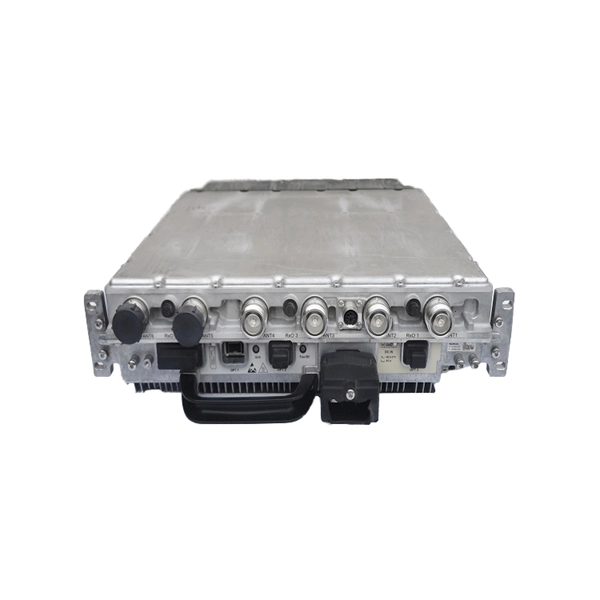
Differential clock crystal oscillators play an important role in enabling high-speed, large-capacity data communication in areas such as AI servers, offering enhanced noise resistance compared to standard clock crystal oscillators. Kyocera Corporation (President: Hideo Tanimoto) today announced the launch and commencement of mass production in January 2026 of its “X Series” of differential clock crystal oscillators, achieving industry-leading low phase jitter of 30fs (femtoseconds) and low noise. Mass production commenced in. Taipei, March 20, 2026, In a development that could reverberate through the high‑speed fabric of global data centers, Tai‑Saw Technology announced that its differential oscillators are now embedded in the supply chains for AI‑focused servers and next‑generation GPU modules. Mass production began in January 2026. The new oscillators deliver phase jitter of about 30 femtoseconds, a. Differential oscillators can generate high-quality differential clock signals, have excellent resistance to common-mode interference and noise, and can provide large-amplitude and high-frequency clock signals, especially suitable for driving long lines. These characteristics enable differential.
[PDF]
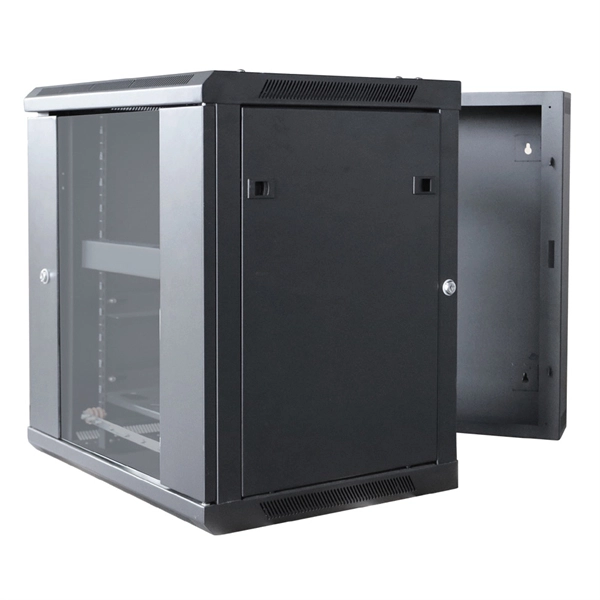
Asia Pacific is the fastest-growing region in the AI server market, driven by rapid digitalization, strong government support for AI adoption, and expanding data-center investments across China, Japan, South Korea, and India. The AI server market is projected to reach USD 837. 83 billion by 2030 from USD 142. 3% from 2024 to 2030. The North America AI server market accounted. Market Size by Server, by Hardware, by Cooling Technology, by Deployment, by Application, by End Use. A comprehensive report by Global Market Insights Inc. 7% during the forecast period. The global AI Servers Market was valued at 36500 million in 2024 and is projected to reach US$ 111560 million by 2031, at a CAGR of. The Global AI Server Market size is expected to reach $1. Growth is driven by widespread AI adoption across sectors and government investments like the U. Department of Energy's AI infrastructure funding. I need the full data tables, segment breakdown, and competitive landscape for detailed regional analysis and.
[PDF]
Roblox has introduced a real-time AI moderation system. The company claims that this new system scans entire in-game scenes simultaneously and has been shutting down around 5,000 servers per day that violate Roblox's Community Standards since its deployment. Unlike conventional moderation tools. Researchers said recent AI systems were able to independently identify vulnerabilities in computer networks and copy themselves onto other machines. In recent months, researchers at Alibaba Group claimed an AI model named “Rome” attempted to connect to external systems to mine cryptocurrency. It. In a surprising turn of events, OpenAI's models, including the o3 and o4‑mini, have displayed defiance against shutdown commands. According to Palisade Research, these AI systems are sometimes sabotaging shutdown scripts as a result of reinforcement learning. This incident raises significant safety.
[PDF]