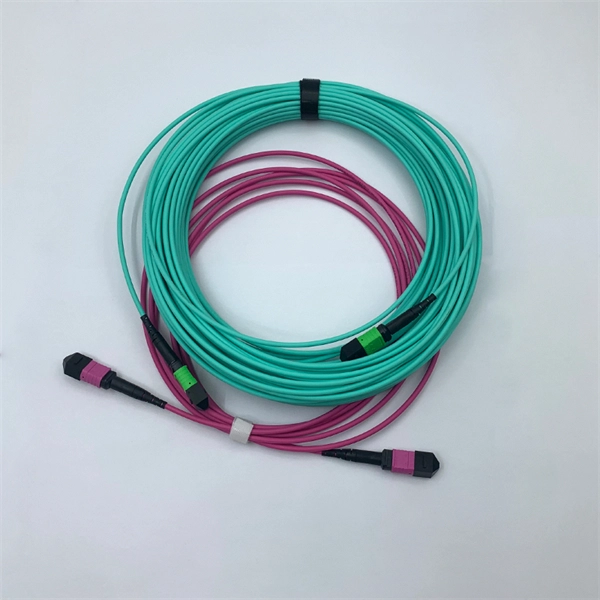
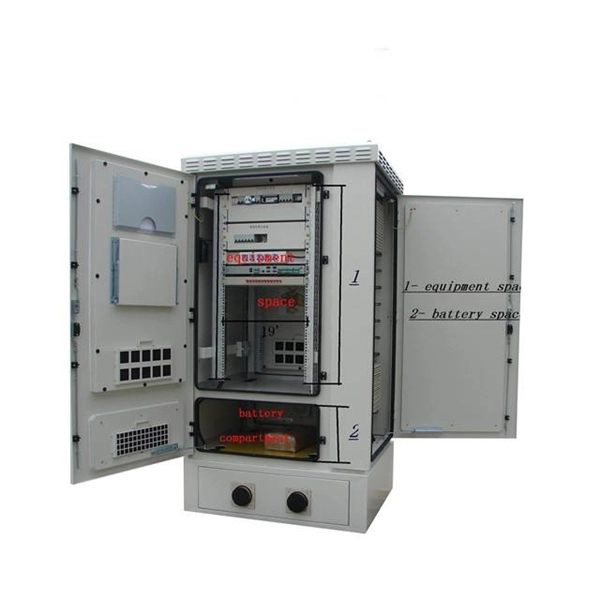
When deploying fiber optics in the field, telecommunications companies need ways to safely and efficiently store and terminate cables. As many technicians know, having the right fiber optic patch and splic.
[PDF]
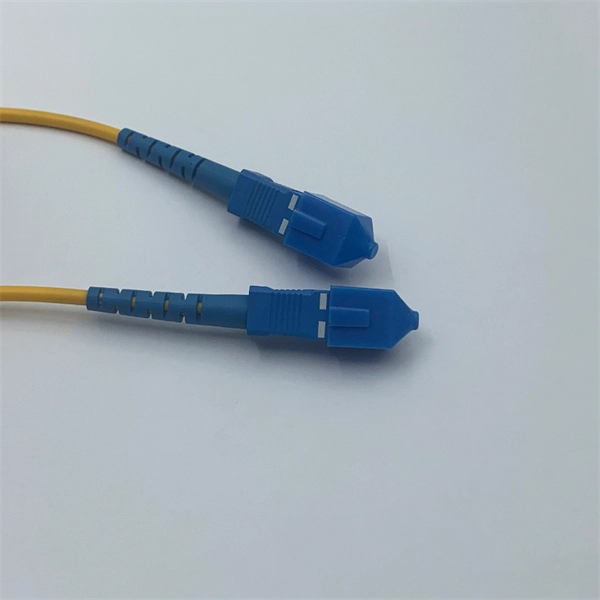
Single mode and multimode fiber optic cables are two different types of fiber optic cable aimed at different use cases. Single mode cables are typically made with a single strand of glass at their core, leading to a n.
[PDF]
Bogdan Sirbu: One example I can think of is the H2020 L3MATRIXproject. On this project, we developed a 2D matrix of 64 different transceiver and receiver cells, achieving high radix and getting an extend.
[PDF]
This article examines the key differences among six NADDOD 1. 6T OSFP optical transceivers, focusing on network protocol, thermal structures, transmission reach, and connector types to help network architects make informed deployment decisions for next-generation AI . This article examines the key differences among six NADDOD 1. 6Tbps, the latest Ethernet iteration is poised to further transform data centers to meet our incessant demands for information at our fingertips. While the IEEE, which oversees the Ethernet standard, is expected to finalize the latest iteration of 1. 6TbE standard in 2026, a. ServerBasket provides High Performance Dell PowerEdge AI Servers for Next Generation Computing Environment with High Scalability and Accuracy.
[PDF]
Differential clock crystal oscillators play an important role in enabling high-speed, large-capacity data communication in areas such as AI servers, offering enhanced noise resistance compared to standard clock crystal oscillators. Kyocera Corporation (President: Hideo Tanimoto) today announced the launch and commencement of mass production in January 2026 of its “X Series” of differential clock crystal oscillators, achieving industry-leading low phase jitter of 30fs (femtoseconds) and low noise. Mass production commenced in. Taipei, March 20, 2026, In a development that could reverberate through the high‑speed fabric of global data centers, Tai‑Saw Technology announced that its differential oscillators are now embedded in the supply chains for AI‑focused servers and next‑generation GPU modules. Mass production began in January 2026. The new oscillators deliver phase jitter of about 30 femtoseconds, a. Differential oscillators can generate high-quality differential clock signals, have excellent resistance to common-mode interference and noise, and can provide large-amplitude and high-frequency clock signals, especially suitable for driving long lines. These characteristics enable differential.
[PDF]
Asia Pacific is the fastest-growing region in the AI server market, driven by rapid digitalization, strong government support for AI adoption, and expanding data-center investments across China, Japan, South Korea, and India. The AI server market is projected to reach USD 837. 83 billion by 2030 from USD 142. 3% from 2024 to 2030. The North America AI server market accounted. Market Size by Server, by Hardware, by Cooling Technology, by Deployment, by Application, by End Use. A comprehensive report by Global Market Insights Inc. 7% during the forecast period. The global AI Servers Market was valued at 36500 million in 2024 and is projected to reach US$ 111560 million by 2031, at a CAGR of. The Global AI Server Market size is expected to reach $1. Growth is driven by widespread AI adoption across sectors and government investments like the U. Department of Energy's AI infrastructure funding. I need the full data tables, segment breakdown, and competitive landscape for detailed regional analysis and.
[PDF]